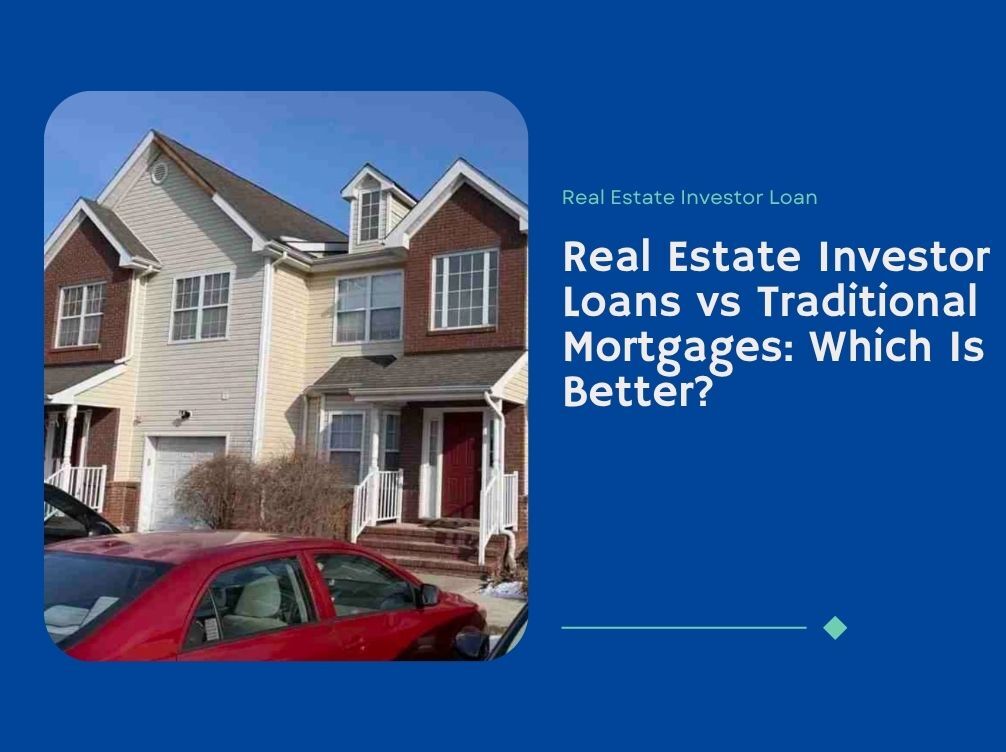




Building long-term wealth through real estate isn't just about buying more properties, it's about choosing the right type of investment and financing strategy. Multifamily properties offer investors the opportunity to generate consistent cash flow, increase equity, and scale their portfolios faster than many other real estate assets. When paired with the right financing, they can become a powerful long-term wealth-building tool. .
Why Multifamily Properties Build Wealth Faster Than Single-Family
A single-family rental gives you one income stream and one point of failure. Lose that tenant, and your cash flow drops to zero overnight. An apartment building spreads that risk across five, twenty, or a hundred units, so one vacancy barely moves the needle.
That's the operational case for multifamily. The financial case is even stronger. Multifamily real estate loans are underwritten differently than a typical mortgage: instead of qualifying you on your personal income, the lender qualifies the property based on its Net Operating Income (NOI), DSCR and asset value, the total rental revenue minus operating expenses like maintenance, insurance, property management, and taxes, before debt service. That shift matters more than it sounds like it should, because it means the asset does the heavy lifting, not your W-2.
Here's why that distinction compounds over time:
- You scale on the property's performance, not your personal debt-to-income ratio
- Unlike conventional residential financing, investors can continue expanding their multifamily portfolios without the traditional mortgage limitations.
- Every unit you add multiplies your cash flow and equity simultaneously
- You control your property's value directly through operational decisions, not just market timing
|
Feature |
Single-Family Rental |
Multifamily Property |
|
Rental Income |
One tenant |
Multiple tenants |
|
Vacancy Risk |
Higher (one vacancy = no rental income) |
Lower (income continues from occupied units) |
|
Financing |
Residential mortgage |
Commercial or multifamily financing |
|
Property Value |
Mostly driven by comparable sales |
Driven by Net Operating Income (NOI) and market conditions |
|
Portfolio Growth |
Slower, one property at a time |
Faster, multiple units acquired in a single investment |
Multifamily vs. Single-Family: The Math Behind Scale
Consider two investors putting the same amount of capital to work. One buys five separate single-family homes over five years, coordinating five different closings, five different insurance policies, and five different maintenance schedules. The other buys a single 20-unit apartment building. Both end up with similar total exposure, but the multifamily investor gets there in one transaction, with one loan, one property manager, and one set of systems to maintain. Time and complexity are wealth-building resources too, and multifamily financing is built to protect both.
The Diversification Effect
There's a risk-management case for multifamily that's easy to overlook when you're focused on returns. A single-family rental is binary: it's either fully occupied or generating zero income. A 20-unit building operating at 90% occupancy is still cash-flowing on 18 units while you fill the other two. That built-in buffer means one lost tenant, one slow eviction, or one unexpected repair doesn't threaten your entire monthly income the way it can with a single-family portfolio.
It also means your lender sees a more resilient asset, which is part of why apartment buildings can often qualify for more favorable debt structures than an equivalent dollar amount spread across several single-family mortgages.
The 4 Wealth-Building Levels of Multifamily Investment Loans
Multifamily investment loans don't just fund a purchase, they set up four distinct ways your net worth grows over the life of the asset.
Level 1: Monthly Cash Flow
Once your building is stabilized and units are leased at market rent, the difference between your rental income and your operating expenses plus debt service is cash flow you collect every month. With customized repayment structures designed around the investment strategy, you can tailor your loan to prioritize cash flow now or faster equity buildup over time, depending on your strategy.
Here's a simple illustration: a 20-unit building generating $30,000/month in gross rent, with $10,000/month in operating expenses, leaves $20,000/month in NOI. If your monthly debt service on that property runs $15,000, you're left with $5,000/month in positive cash flow, income that lands in your account whether or not the property appreciates a single dollar that year.
Level 2: Forced Appreciation
This is the lever most investors underestimate. Multifamily properties are valued on their NOI, not on comparable sales the way single-family homes are. That means you can directly increase your property's value by increasing its income.
- Raising rents by $100/unit on a 20-unit building adds $2,000/month, or $24,000/year, in NOI
- At a 6% cap rate, that $24,000 annual NOI increase translates into roughly a $400,000 increase in property value
- You didn't wait for the market to move. You created that equity through operations.
This is the core reason experienced investors gravitate toward multifamily: single-family appreciation depends largely on the market. Multifamily appreciation is something you can influence directly through occupancy, rent growth, and expense management.
Level 3: Equity Paydown
Over the life of a long-term loan, that steady paydown builds real, bankable equity, separate from any market appreciation. It's slow, it's boring, and it's one of the most reliable wealth-building mechanics in real estate.
Level 4: Leverage
A multifamily loan lets you control a multi-million dollar asset with a fraction of that amount in cash. If the property appreciates 10%, your return on the equity you actually put in is significantly higher than 10%, because you're earning that return on the full asset value, not just your down payment. This is also why sensible leverage, backed by a defined DSCR and a stabilized income stream, is core to how these deals get structured in the first place.
Here's what that looks like with real numbers. Say you put $500,000 down on a $2M apartment building, financing the remaining $1.5M. If the property's value increases by $200,000 over a few years, whether through market appreciation or NOI growth, that's a 40% return on your $500,000 in equity, not a 10% return on the full $2M asset. Leverage is what turns a modest gain at the property level into a meaningful gain at the personal balance sheet level.
A Note on Taxes: Multifamily real estate also carries potential tax advantages, like depreciation, that can offset taxable income. This isn't tax advice, and every investor's situation is different, so talk to a CPA about how these apply to your specific deal.
3. How to Qualify for Loans for Multifamily Homes
Financing an apartment building looks nothing like getting a conventional home mortgage. Here's what actually matters when you apply for loans for multifamily homes with an asset-based lender.
What lenders typically evaluate:
- Net Operating Income (NOI): Your property's total rental revenue minus operating expenses, before debt service
- Debt Service Coverage Ratio (DSCR): NOI divided by your annual debt payment; most lenders look for 1.20x–1.25x or higher
- Occupancy rate: Properties should generally be stabilized, at or near 85%+ occupancy
- Property type: Apartment buildings, condos, townhome communities, and mixed-use properties with majority residential space, typically 5+ units
- Loan amount: Financing generally ranges from $500,000 to $10M or more, depending on the asset
What you typically won't need:
- W-2s or pay stubs
- Personal tax returns
- Employment verification
That last point is the biggest difference from a residential mortgage, and it's why self-employed investors, business owners, and anyone with a non-traditional income structure are often better served by multifamily financing than by trying to qualify personally through a bank.
Property Types That Typically Qualify
Not every multi-unit building fits the mold, but most conventional apartment assets do:
- Garden-style apartment complexes
- Mid-rise apartment buildings
- Townhome communities operated as rental portfolios
- Condo buildings held as investment units
- Mixed-use properties with majority residential square footage
The common thread is 5 or more residential units and a documented income history, or a clear path to one.
How the Financing Process Typically Works
Getting funded doesn't have to be a months-long ordeal. Most asset-based multifamily lenders follow a similar sequence:
- Submit your deal details. Property address, unit count, current rent roll, and your loan purpose (acquisition, refinance, or cash-out).
- Get evaluated on the numbers. The lender reviews NOI, DSCR, occupancy, and asset value, not your personal income documents.
- Order the appraisal and finalize underwriting. Minimal paperwork required, since the property carries most of the qualification weight.
- Close and put the capital to work. Funds are released for your acquisition, refinance, or portfolio expansion plan.
Understanding DSCR and Cap Rate
Two numbers drive almost every conversation with a multifamily lender:
- DSCR (Debt Service Coverage Ratio) measures whether the property generates enough income to cover its own debt payments. A DSCR of 1.25x means the property produces 25% more income than its debt service requires, giving the lender, and you, a cushion.
- Cap Rate is the ratio of NOI to property value (Cap Rate = NOI ÷ Property Value). A 6% cap rate on a building with $120,000 in annual NOI implies a $2M valuation. Lower cap rates generally reflect higher property values in stronger markets.
Understanding both numbers before you make an offer means you can walk into any lender conversation speaking their language, which almost always speeds up your approval.
Mistakes That Slow Down Your Application
Even solid deals can stall in underwriting if the paperwork isn't put together well. Watch for these common missteps:
- Submitting incomplete rent rolls. Lenders want to see current, unit-by-unit rental income, not a rounded estimate for the whole building.
- Underreporting operating expenses. Leaving out line items like maintenance reserves or property management fees inflates your apparent NOI and can create problems later in underwriting.
- Overestimating post-renovation rents. Base your projected NOI on comparable rents in the immediate area, not aspirational numbers.
- Waiting until after you're under contract to start the conversation. Getting pre-approved before you make an offer means you can move the moment you find the right property.
4. Using a Multifamily Refinance Loan to Scale Your Portfolio
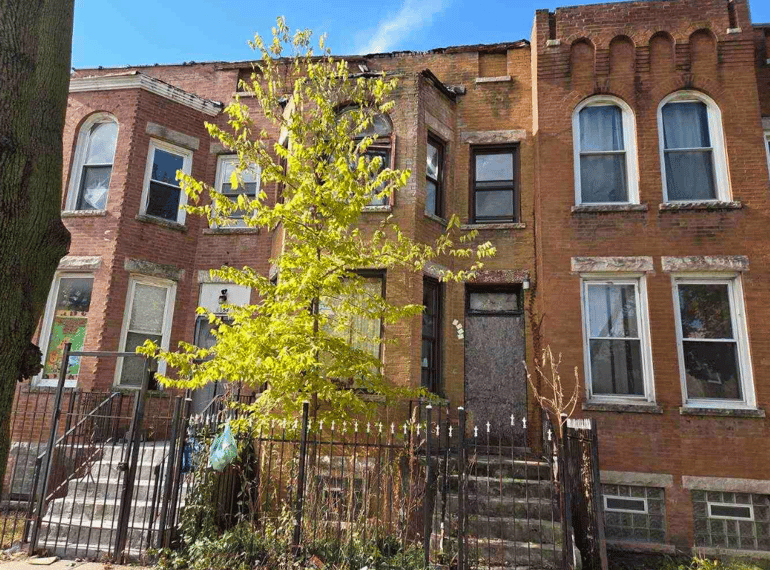
Buying your first apartment building isn't the finish line, it's the first rung. The fastest way most investors scale from one multifamily property to a full portfolio is by pulling equity out through a multifamily refinance loan and redeploying that capital into the next deal.
Here's the typical playbook:
- Acquire and stabilize. Buy a distressed or underperforming property, often with short-term bridge financing, and execute your value-add plan: renovate units, improve management, raise rents to market rate.
- Let NOI catch up. Once occupancy and rental income stabilize, your property's value reflects the improvements you made.
- Refinance into a long-term loan. Converting your short-term bridge financing into stable, long-term debt often unlocks cash-out equity in the process.
- Redeploy the equity. Use that cash-out capital as the down payment on your next acquisition, and repeat the cycle.
This refinance-and-reinvest cycle is how many investors go from a single 10-unit building to a multi-property portfolio without needing to save up a fresh down payment for every deal. The equity you built through NOI growth and principal paydown becomes the fuel for your next purchase.
5. Why InstaLend Is a Top Choice Among Multifamily Mortgage Lenders
InstaLend is a private, asset-based lender ranked #727 on the Inc. 5000 (2024) and #99 on the FT Americas' Fastest-Growing Companies list (2025). We structure multifamily financing around your property's income and value, not your personal financial history.
Here's what sets us apart from conventional multifamily mortgage lenders:
- Loan amounts from $500,000 to $10M+, sized to your deal
- No income verification — qualification is based on NOI, DSCR, and asset value
- No upfront application fees to get started
- Flexible use of funds: acquisition, refinancing, cash-out, or portfolio expansion, all under one loan product
- Custom loan structures tailored to your DSCR profile, LTV needs, and exit strategy
- 46-state nationwide lending, with strong volume in IL, NJ, NY, NC, SC, DE, FL, and MA
Whether you're financing your first stabilized apartment building or refinancing your tenth to unlock equity for the next one, our team builds the loan around your investment strategy instead of forcing your deal into a rigid checklist.
Who This Financing Is Built For
- Value-add investors who've stabilized a property and are ready to convert bridge debt into long-term financing
- Buy-and-hold operators acquiring stabilized apartment buildings for steady cash flow
- Self-employed investors and business owners whose tax returns don't reflect their actual purchasing power
- Portfolio builders looking to pull equity out of one asset to fund the next acquisition
- Out-of-state investors who want a fully digital process without needing to be on-site to close
Ready to Put Your Equity to Work?
Long-term wealth in multifamily real estate comes down to the same formula every time: cash flow, forced appreciation, equity paydown, and leverage, compounding together over years, not months. The right financing partner doesn't just fund the purchase. They help you structure the loan so all four levers work in your favor from day one.
Ready to Finance Your Next Multifamily Deal?
Get a loan structured around your property's income, not your personal tax returns. No income documentation required.
Apply for a Multifamily Loan →