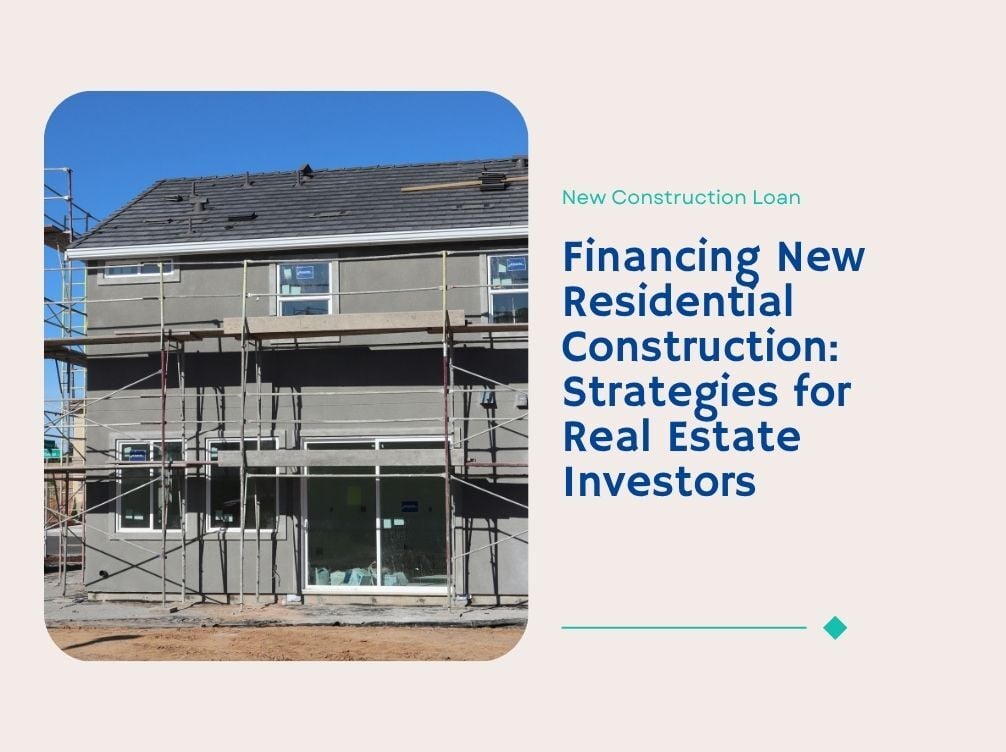




You've found an apartment building with real upside. Occupancy is soft, rents are below market, and a round of renovations could push both way up. There's just one catch: the property doesn't qualify for permanent financing yet, and you don't have years to wait around while you stabilize it the slow way.
This is exactly the gap bridge financing was built to fill. If you've never used multifamily bridge loans before, the concept can feel a little abstract, so let's break down what it actually is, how it works, and when it makes sense for your next multifamily deal.
What Is a Multifamily Bridge Loan, Exactly?
At its core, a bridge loan does exactly what the name suggests: it bridges the gap between where your property is today and where it needs to be for long-term financing or a sale.
Multifamily bridge loans are short-term, asset-based loans typically used for apartment buildings with five or more units. Instead of evaluating your personal income the way a conventional lender would, we look at the property itself, its current value, its projected value once your plan is executed, and the strength of your business plan for getting there.
Here's what makes this type of financing distinct:
- It's short-term by design. You're not signing up for a multi-decade mortgage. You're financing a transition period.
- It's asset-based, not income-based. No W-2s, no tax returns, no employment verification standing between you and your acquisition.
- It moves at investor speed. Because underwriting focuses on the deal, closings happen much faster than a conventional commercial loan.
- It's built for properties in motion. Distressed, under-leased, or mid-renovation buildings that wouldn't qualify for permanent financing yet.
If you're weighing apartment bridge loan options for the first time, think of this financing as the tool that lets you act now on a deal that has real potential, without waiting for the property to prove itself first.
How a Bridge Loan Differs From Permanent Multifamily Financing
This is where a lot of confusion happens for investors who are used to conventional commercial mortgages. Bridge loans and permanent loans aren't competing products. They're built for completely different stages of a property's life.
Here's the practical breakdown between these two multifamily real estate loans categories:
- Term length is fundamentally different. Bridge financing runs on a short, defined timeline. Permanent multifamily loans stretch out over decades.
- Qualification standards differ. Permanent lenders want stabilized occupancy and proven cash flow. Bridge lenders evaluate the plan and the property's potential.
- Payment structure often differs too. Interest-only payments are common with bridge financing, which keeps your carrying costs manageable while you execute your business plan.
- The end goal is different. A bridge loan is meant to be replaced, either by refinancing into permanent financing once the property stabilizes or by selling once your value-add work is complete.
Think of it this way: multifamily real estate loans for stabilized, cash-flowing buildings are a completely different product built for a completely different purpose than the short-term capital you need to get a transitional property across the finish line. Understanding that distinction upfront will save you from shopping for the wrong product entirely.
When You Should Use a Bridge Loan
Bridge financing isn't the right tool for every multifamily deal, and knowing when to reach for it is just as important as understanding how it works.
Consider a bridge loan when:
- You're acquiring a distressed or under-leased property that a conventional lender wouldn't touch in its current condition.
- You need to close quickly to beat out other buyers in a competitive acquisition scenario.
- You have a clear value-add plan, whether that's renovation, releasing at market rents, or improved management, that will meaningfully raise the property's value.
- The property isn't stabilized yet, meaning it doesn't have the occupancy or cash flow history a permanent lender requires.
- You're planning to refinance or sell once your business plan is executed, rather than holding with this financing long-term.
On the other hand, if your property is already stabilized with strong occupancy and consistent cash flow, a permanent loan will likely offer better long-term terms. Short term multifamily loans exist specifically for the in-between phase, not as a permanent hold strategy, and treating them as one usually costs investors more in the long run. Matching the right financing to the right stage of your investment is one of the most important decisions you'll make on any deal.
What Qualifies a Property for Bridge Financing
One of the biggest advantages of bridge financing is that properties don't need to be in great shape to qualify. In fact, that's often the whole point.
Properties that typically qualify include:
- Apartment buildings with five or more units, the standard threshold for multifamily classification.
- Mixed-use properties with majority residential space, where the primary income driver is still rental units.
- Distressed or partially occupied buildings that need work before they can compete at market rates.
- Properties mid-renovation, where you're already executing on improvements but haven't reached stabilization.
- Value-add repositioning projects, where the current state of the property doesn't reflect its true potential.
What matters most to us isn't the property's current condition. It's whether your plan for improving it is realistic and well-documented. Strong multifamily bridge financing applications lead with a credible timeline and budget, which will carry far more weight than a building that already looks perfect on day one.
How Value-Add Investors Use Bridge Loans to Build Equity
If you're pursuing a value-add strategy, bridge financing isn't just a financing tool. It's the engine that makes the entire strategy work.
Here's how experienced investors typically use this approach:
- They acquire below market value, targeting properties with clear upside that other buyers overlook or can't finance conventionally.
- They fund renovations and improvements through the bridge loan, using draws or disbursements tied to their project timeline.
- They raise net operating income (NOI) through better management, improved units, and market-rate releasing.
- They refinance into permanent financing once the property's stabilized value supports better long-term terms, often unlocking additional equity in the process.
- Or they sell at the new, higher valuation, capturing the spread between acquisition cost and stabilized market value.
This cycle, acquire, improve, stabilize, and then refinance or sell, is the backbone of most successful multifamily value-add strategies. Short term multifamily loans are what make each step possible, giving you the capital to execute your plan without waiting years for a conventional loan to catch up to where your property will eventually be.
What to Expect When You Apply With InstaLend
If you're used to the pace of conventional commercial lending, our bridge loan process is going to feel refreshingly direct. Here's generally what you can expect when you apply with us:
- We evaluate the property and your plan first. We review the current state of the property alongside your renovation or repositioning plan, not a stack of personal financial documents.
- We underwrite the deal, not your paycheck. Asset-based underwriting means your personal income documentation takes a back seat to the strength of the project.
- We move faster than conventional commercial lenders. Our bridge closings typically clear in a fraction of the time a traditional bank would need.
- We structure interest-only payments during the term, keeping your monthly obligations aligned with your property's current, not future, cash flow. This is standard across most apartment bridge loan structures we fund.
- We talk through your exit strategy upfront. We want to understand whether you're planning to refinance into permanent financing or sell once your plan is executed.
Before you apply, have your business plan, renovation budget, and timeline ready to go. The more organized your documentation, the smoother and faster your path to closing with us will be.
Bringing It All Together
A multifamily bridge loan exists for exactly one purpose: to give you the capital and the timeline you need to take a property from where it is today to where it has the potential to be. It's not a replacement for permanent financing, and it's not meant to be a forever loan. It's the tool that lets you act on opportunity while other investors are still waiting on a conventional lender to catch up.
We built our bridge lending around exactly this kind of deal: asset-based underwriting, fast closings, and multifamily bridge financing structured around your business plan instead of your personal financial history. Explore our multifamily bridge loan options and see how the numbers work for your next acquisition.
Frequently Asked Questions
1. When should you use a multifamily bridge loan?
You should consider a multifamily bridge loan when you're buying a property that isn't ready for permanent financing. If you're planning renovations, increasing occupancy, or improving the property's value before refinancing or selling, bridge financing can help you move quickly and execute your investment strategy.
2. How is a multifamily bridge loan different from a traditional multifamily loan?
The biggest difference is the purpose. A multifamily bridge loan is short-term financing designed for transitional properties, while a traditional multifamily loan is meant for stabilized properties with consistent cash flow. We use bridge financing to help you improve the property before moving into long-term financing.
3. What types of properties qualify for multifamily bridge financing?
Bridge financing is commonly used for apartment buildings, value-add properties, under-leased communities, mixed-use properties with primarily residential units, and buildings that need renovations before they qualify for permanent financing.
4. Can you refinance a bridge loan after your property is stabilized?
Yes. Many investors use a bridge loan as a temporary financing solution and refinance into a long-term multifamily loan once renovations are complete, occupancy has improved, and the property's income is more stable.
5. What should you prepare before applying for a multifamily bridge loan?
Before you apply, we recommend preparing a detailed business plan, renovation budget, project timeline, and exit strategy. Having these documents ready helps us evaluate your project more efficiently and can lead to a smoother approval process.